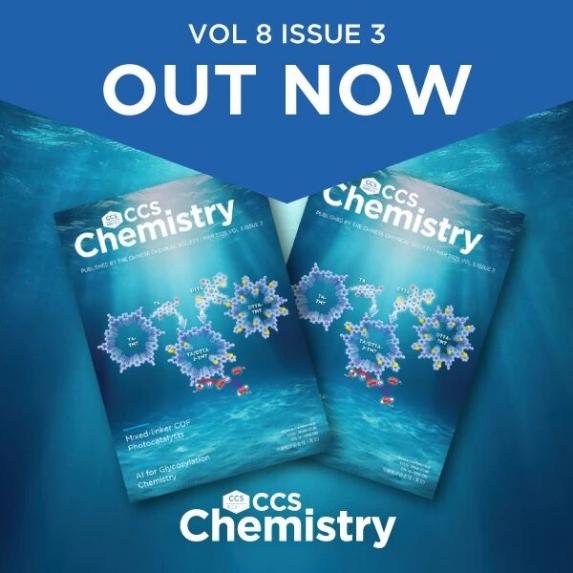
CCS Chemistry Volume 8 Issue 3 Editorial: Many voices, one science
“Many voices, one science.”
—Theme of the 2026 IUPAC Global Women’s Breakfast
As is our tradition here at CCS Chemistry, we take an intentional pause in March to celebrate two important international days that take place annually: The International Day of Women and Girls in Science on February 11 and International Women’s Day on March 8. These two special days, occurring within a month span, provide an opportunity for us to highlight the contributions and achievements of women in science and society.
To celebrate the International Day of Women and Girls in Science, each year the International Union of Pure and Applied Chemistry (IUPAC) holds a Global Women’s Breakfast (GWB). The event is intended to foster “a global network to break barriers to gender equity in science,” and since its start in 2019, around 2,500 events have been held with participants from more than 100 countries.1 Being China’s national representative for IUPAC, the Chinese Chemical Society (CCS) has been active in the organizing GWB events in China, and this year, events were held in 12 cities: Beijing, Changchun, Lanzhou, Nanjing, Wuxi, Suzhou, Shanghai, Wuhan, Hangzhou, Fuzhou, Xiamen, and Hong Kong. The events, held on February 10, were organized by the CCS Women’s Chemist Committee and had over 350 chemical scientists and technologists in attendance, including 14 Academicians from the Chinese Academy of Sciences and the Chinese Academy of Engineering.
In addition to individual GWB events in each of the 12 cities, CCS also held a virtual opening ceremony with a video connection uniting the 12 participating locations. Li-Jun Wan, CCS President and Professor at the Institute of Chemistry, Chinese Academy of Sciences (ICCAS); Vivian Wing-Wah Yam, CCS Vice President and Director of the CCS Women’s Chemists Committee; Li-Zhu Wu, Vice President of the National Natural Science Foundation of China; and Qinghua Fan, CCS Vice President and Secretary-General and Deputy Director of ICCAS, all attended the opening ceremony and gave presentations. Prof. Wan stated that the IUPAC GWB was an important platform for promoting international exchange and building consensus, and he hoped that it would serve as an opportunity to strengthen communication and cooperation, gather wisdom from all parties, and jointly promote the sustainable development of the chemical industry.
The entire event centered around communication and cooperation for a common purpose. A “City Connection” session was held after the opening ceremony and was moderated by Huanli Dong, Secretary-General of the CCS Women’s Chemists Committee and professor at ICCAS (Figure 1). During the City Connection session, representatives from each of the 12 cities in China introduced activities taking place in their respective venues and shared ideas, experiences, and inspiration with the other attendees.
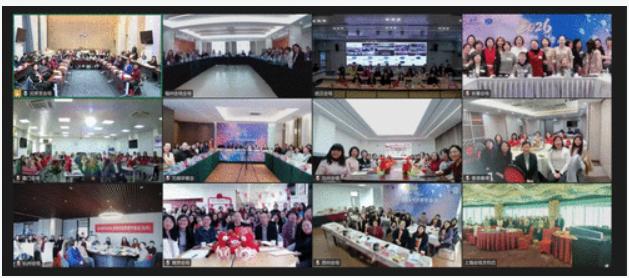
Figure 1 | City Connection Session at 2026 IUPAC Global Women’s Breakfast Meetings held in 12 cities around China.
Following the City Connection session, the video portion concluded, and each host city conducted offline activities, including keynote speeches, group photos, thematic discussions, and roundtable panels focusing on multiple topics (Figure 2). This year’s IUPAC GWB in China provided an important way for women chemists in different cities around the country to share their academic, management, and technological experiences in support of each other’s career development and to promote innovation through connection.
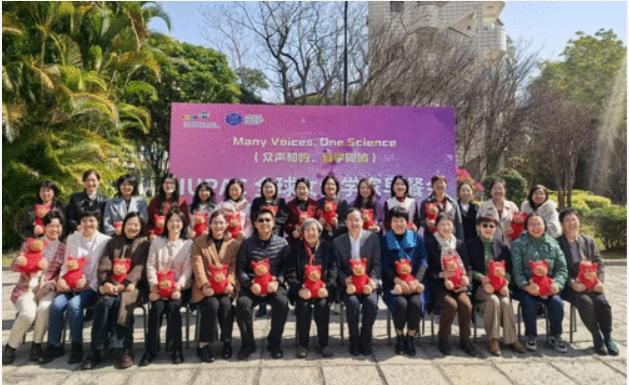
Figure 2 | Xiamen venue group photo from the 2026 IUPAC GWB event.
The IUPAC GWB event and theme of “Many voices, one science” is an excellent example of the power of individuals with unique expertise and experience sharing challenges and learning from each other. In the case of the GWB, women chemists come together and provide mutual encouragement, and the different local venues can exchange lessons learned, as well as new ways to provide mentoring and support for women in chemistry.
Without such exchanges, like the GWB or other research meetings and gatherings, we can often get stuck in the mentality and processes within our own local department, institution, or city. It is only by looking outside our immediate environment that we can catch a glimpse of what is happening and being done elsewhere—at another lab, institution, or even country—and be instantaneously presented with a fresh, often paradigm-shifting, perspective.
Such expanding of our perspective is an integral part of what it means to be a chemist. With the growth of the chemical sciences, chemistry has been fractionated into many different disciplines, including inorganic, organic, analytical, physical, polymer, biochemistry, and chemical biology. As a result of separating disciplines into formalized categories, each has developed its own set of concepts, languages, and systems. The benefit of this approach is that it has led to fantastic progress in the individual disciplines; however, with so many disciplines, or “voices,” it’s important to remind ourselves that chemistry is a single field. We chemists are all practicing “one science,” and as such we need to combine the many voices of our different disciplines to contribute to and strengthen the field as a whole.
With the abundance of knowledge available and limited time to ingest it, it is necessary to learn chemistry within the context of a single discipline. But, these disciplines are artificial constructs developed to facilitate learning. Boundaries between disciplines are, in fact, dynamic, and overattachment to or overidentification with a single discipline restricts growth, just as limiting our focus to only what is going on in our immediate local environment can cause us to miss critical sources of ideas and inspiration from the outside. If we stay stuck in a single discipline, it is difficult to be innovative and creative. We cannot see the forest for the trees.
When taking on a complex problem, we need to find a solution—regardless of which discipline or combination of disciplines the solution can be found. It does not matter if the solution is from inorganic, organic, or physical chemistry, or even outside of the field of chemistry. In fact, the most innovative solutions originate from thinking far outside of the box and looking beyond set boundaries of disciplines and scientific fields.
Boundaries among the disciplines have become increasingly blurred as highly sophisticated problems require interdisciplinary solutions. With the help of artificial intelligence (AI), this blurring process is accelerating even faster. Complex technical knowledge in any discipline can be summoned and summarized at sub-second speeds with AI (though such outputs should always be scrutinized for accuracy). With this advancing power of AI, we may not need to spend as much time remembering and searching for detailed knowledge and can spend more time doing what AI does not do well: determining the best way to synthesize and create new knowledge among all the disciplines to advance science.
While the research for each of these articles in this issue took place in different locations around China and the world, they, and the researchers performing the work, are intricately connected. All researchers are part of the chorus of many voices advancing the one science, more specifically, the field of chemistry. Each researcher has different a daily routine, an office or laboratory in the hills or in the city, may call themselves a “theoretician” or “polymer chemist,” and may even speak a different language. But, at the core and by profession, we are all humans invested in solving and communicating challenging scientific problems to the best of our ability and with the resources we have available. By approaching challenges nature has set before us with an eye towards communication, cooperation, mutual respect and appreciation for those from other places and in different disciplines, and an open mind, a limited perspective can be transformed into an expanded universe of infinite possibilities and discoveries.
Prof. Dr. Xi Zhang
Editor-in-Chief
E-mail:xi@tsinghua.edu.cn
Dr. Donna J. Minton
Director of Publications, CCS
E-mail: donna.minton@chinesechemsoc.org
References:
1. International Union of Pure and Applied Chemistry. Many Voices, One Science. https://iupac.org/gwb/. (accessed February 16, 2026).
Link for the original text:
https://doi.org/10.31635/ccschem.026.202600223ed1